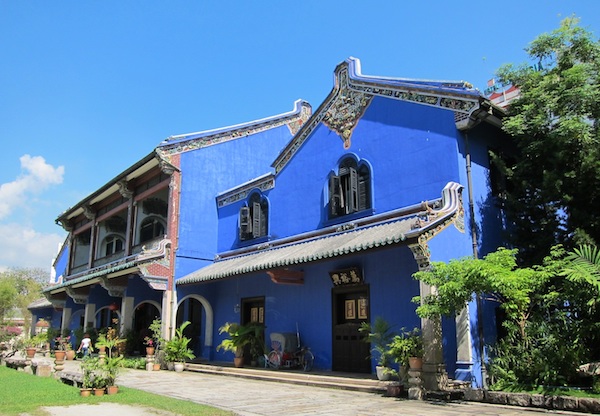
Cheong Fatt Tze Mansion
Built in the 1890s, and restored in the 1990's (earning it an UNESCO award in 2000), this indigo-blue Chinese Courtyard House in George Town was the main residence of Cheong Fatt Tze, known as the 'Rockefeller of the East' and 'J.P. Morgan of China'. Cheong was a prominent, successful Hakka Chinese merchant who demonstrated his business ability after marrying into a wealthy family, founding the Chang Yu Winery and ending the segregation of Chinese from Europeans on passenger ships. The mansion was built according to feng shui principles by master craftsmen brought in from southern China
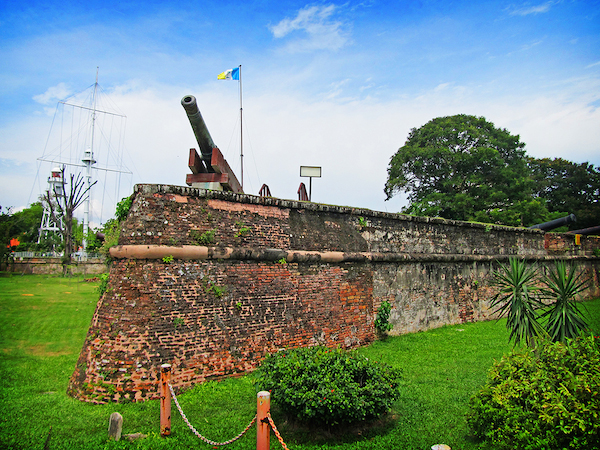
Fort Cornwallis
Light St. The fort, named for Charles Cornwallis is built on the site where Captain Francis Light, founder of Penang, first landed on August 11, 1786. It was first built in 1793. But this site was an unlikely spot to defend the city from invasion. In 1810 it was rebuilt in an attempt to make up for initial strategic planning errors. In the shape of a star, the only actual buildings still standing are the outer walls, a gunpowder magazine, and a small Christian chapel. The magazine houses an exhibit of old photos and historical accounts of the old fort. Entrance RM2 for adults.
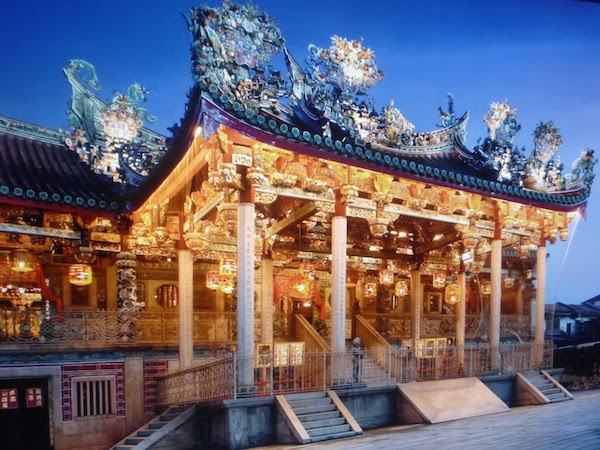
Leong San Tong Khoo Kongsi
Built in 1850 by the forefathers of Khoo family who emigrated from South China, as a clan-house for members of the Khoo family. In 1836, construction of a new temple began and was completed 8 years later. Fire razed the wooden structure to the ground in 1894, it was allegedly struck by lightning. Chinese believed that it was due to its resemblance to the Emperor's palace, which provoked the gods. A scaled-down version was later built in 1902 and completed in 1906. The richly ornamented carvings of the roofs, walls and pillars reflect the art and architecture of ancient China and made of the finest wood.
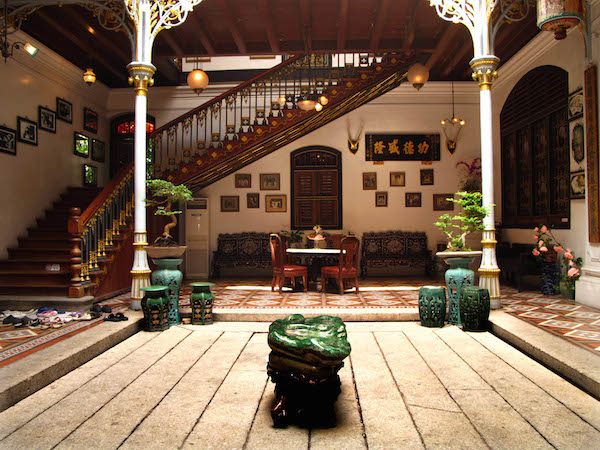
Pinang Peranakan Mansion
Originally the home of Kapitan Chung Keng Kwee, leader of Penang and Perak Hai San groups in the Larut Wars from 1860-1884. The mansion is a typical representation of the Straits eclectic style of architecture highly favoured by rich Peranakan families of old. Affectionally called Hai Kee Chan or Sea Remembrance Store, it served as his residence and office. Mon-Sat 9AM-5PM. Daily conducted tour 11:30AM-3:30PM. Admission fee is RM10 for adults), free for children below 12.
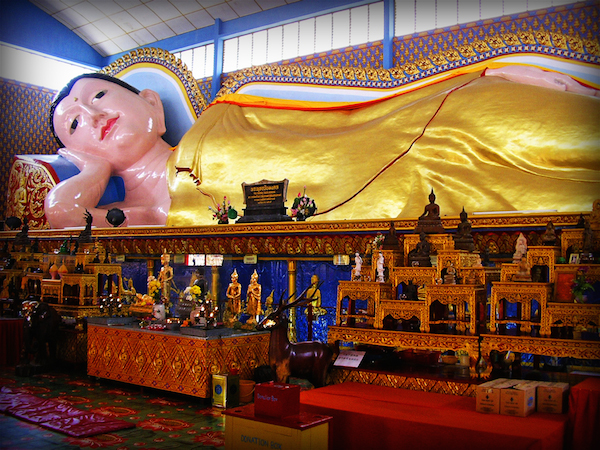
Wat Chaiyamangalaram
Burma Lane (Lorong Burma), was founded in 1845. A Thai-style Buddhist temple that is famous for its reclining Buddha (33 m), one of the world's longest. The temple was built on a piece of land given by Queen Victoria to 4 women trustees as a gesture of goodwill to boost trading relations with Thailand. The guardian dragon and statue at the entrance are both ostentatious and spectacular.
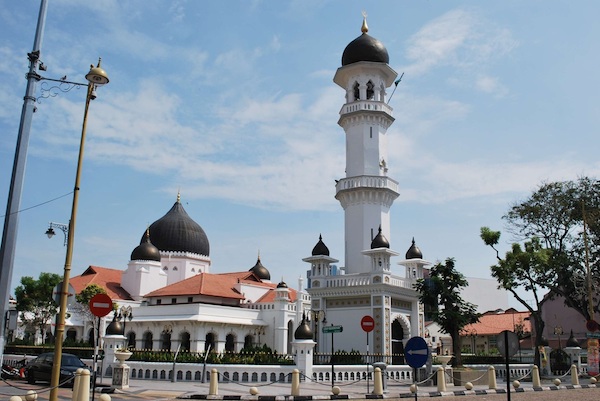
Kapitan Keling Mosque
Pitt St (Jl. Masjid Kapitan Keling) was built in the early 19th century and is named after an Indian Muslim merchant, Caudeer Mohudeen, who was also the Kapitan Keling (headman). It is the most prominent historic mosque in Penang and features a dome-shaped minaret reflecting Moorish Islamic influence. The Kapitan Keling Mosque is the place of worship of the Indian Muslim community which has lived and worked around the mosque for over 200 years. Unlike modern mosques which are heavily frequented on Fridays, the Kapitan Keling Mosque is popular with worshippers 5 times a day, 7 days a week.
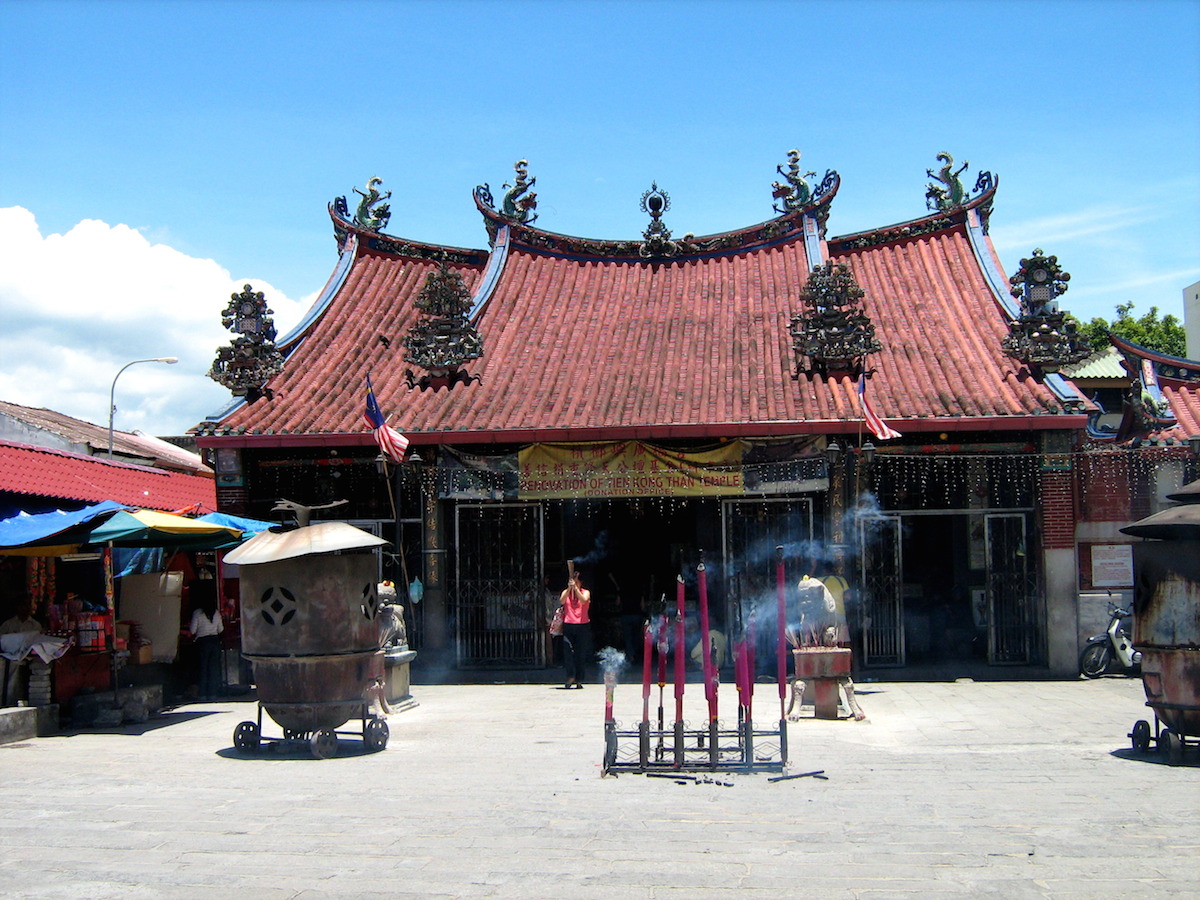
Kuan Yin Teng
This is one of the oldest Chinese temples in Penang. Built in 1801 by early immigrant settlers from China, the building is decorated with intricately crafted dragons and a pair of stone sculptured lions which are said to be its guardians. Undoubtedly the most popular Chinese temple in Penang, the Kuan Yin Teng, is flocked to by pilgrims and followers all year round, particularly on the 1st and 15th day of each lunar month. There is a lovely square where puppet shows and Chinese operas are staged on the Goddess of Mercy's feast days.
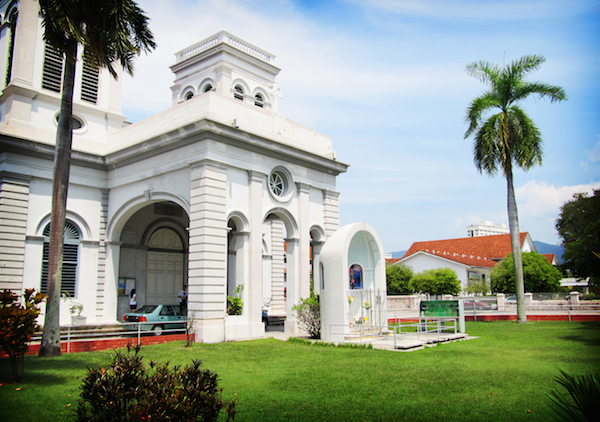
Church of the Assumption
Church of the Assumption, also situated on Farquhar Street and a stone's throw from the Anglican St. George's Church is this twin-towered Roman Catholic church. It is the first permanent Catholic church to be built on Penang island, and was first established by a group of Eurasian immigrants who accompanied Penang's founder, Sir Francis Light to the island. The church is one of the few churches in Malaysia with church bells that were cast way back during British rule. It also houses one of the last remaining and oldest European-made air organs in Malaysia.